One of the first things you’ll probably wonder if you want to be a pilot is, “Am I eligible to become a pilot?” Planning your aviation career starts with understanding pilot eligibility in India. Before starting flight school, prospective pilots must fulfil several conditions, including age restrictions, educational requirements, medical fitness, and licensing requirements.
The good news is that students from a variety of backgrounds can become pilots as long as they fulfil the minimum standards established by the Directorate General of Civil Aviation (DGCA). Knowing about pilot qualifications in India will help you get ready for the path ahead, whether you’re a graduate thinking about changing careers or a high school student investigating career alternatives.
This guide tells you the basic qualification for pilot training in India, medical standards, age criteria, and other important eligibility requirements for aspiring commercial pilots.
Criteria for Pilot in India: Quick Checklist
If you’re wondering whether you meet the criteria for pilot in India, use the checklist below.
| Requirement | Status |
| Completed Class 12 or equivalent | Yes |
| Studied Physics and Mathematics (or equivalent) | Yes |
| Meet the minimum age requirement | Yes |
| Eligible for DGCA Class 2 Medical | Yes |
| Able to obtain DGCA Class 1 Medical | Yes |
| Comfortable communicating in English | Yes |
| Ready to join a DGCA-approved Flying Training Organisation | Yes |
Understanding the Pilot Training Journey
It’s crucial to understand the steps involved in becoming a commercial pilot before talking about the qualifying standards.
It consists of:
- Pilot License for Students (SPL)
- A private pilot’s license (PPL)
- License for Commercial Pilots (CPL)
- Type Rating (for aircraft specific to an airline)
While each level has its own training goals, they all start with fulfilling DGCA-established pilot eligibility requirements in India.
Why Pilot Eligibility Matters
A lot of time and financial commitment are required for flight training – in fact, understanding the complete pilot training cost in India is just as important as meeting the eligibility criteria before you apply. Make sure you fulfil the age, medical, and educational requirements before applying to a flying academy.
It is beneficial to understand the pilot qualification in India
- Select the appropriate academic courses.
- Get ready for the DGCA medical exams.
- Collect the necessary paperwork
- Make a schedule for your training.
- Prevent the licensing procedure from being delayed.
Your move into flight training might go much more smoothly if you fulfil the eligibility requirements early.
Educational Qualification Required to Become a Pilot
One of the most crucial components of a pilot qualification in India is education.
Candidates must typically have completed 10+2 (Higher Secondary) or an equivalent degree from an accredited board to start commercial pilot training.
Subjects Needed:
- Physics
- English
- Mathematics
The basis for comprehending aerodynamics, aircraft systems, navigation, and flight performance is provided by these topics.
Completing 10+2 with Physics and Mathematics is regarded by the majority of aspiring pilots as a basic qualification for pilot training in India.
What If You Didn’t Study Physics and Mathematics?
After school, without taking physics or math, many students find that they are interested in becoming a pilot. Thankfully, this does not mean that your ambition of becoming a pilot is over.
You can finish these courses through DGCA-approved open education or comparable programs. You can start your pilot training as soon as you fulfil this prerequisite.
Because of this flexibility, more students can complete the necessary pilot qualification in India before submitting an application to a flying school.
Minimum Academic Marks
Pilot training often does not require extraordinarily high board test scores, in contrast to many professional courses.
Instead of focusing on reaching a particular percentage, the majority of flying academies concentrate on whether applicants fulfil the required educational criteria.
Airline cadet programs, however, could have their own selection standards, such as aptitude tests and minimal academic achievement.
Age Limit for Pilot Training in India
Although there is no strict maximum age, starting earlier often allows aspiring pilots to build experience sooner and progress more quickly into airline careers.
Age is a significant factor in determining pilot eligibility in India.
| License | Min. age |
| Student Pilot Licence (SPL) | 16 years |
| Private Pilot Licence (PPL) | 17 years |
| Commercial Pilot Licence (CPL) | 18 years |
This means students can begin preparing for aviation careers while still in school.
Fortunately, the DGCA does not set an upper age limit for starting pilot training. Nonetheless, various licenses have minimum age limitations.
This implies that while still in school, students can start training for careers in aviation.
While there isn’t a set age limit, beginning earlier frequently enables prospective pilots to gain experience earlier and advance into airline professions more swiftly.
Medical Requirements for Pilots
One of the most important requirements is medical fitness. Pilots must adhere to the DGCA’s medical requirements since they are in charge of both aircraft operations and passenger safety.
There are two main medical exams:
Class 2 Medical
The Class 2 Medical examination is usually the first medical assessment undertaken by aspiring pilots.
It evaluates:
- General physical health
- Vision
- Hearing
- Blood pressure
- Medical history
Students often complete this examination before joining a flying academy.
Class 1 Medical
The Class 1 Medical examination is mandatory before obtaining a Commercial Pilot Licence.
It includes more comprehensive assessments, such as:
- Eye examination
- ECG
- Chest X-ray
- Blood investigations
- Urine tests
- Hearing assessment
- Cardiovascular evaluation
- Overall physical fitness
Meeting these standards is an important part of commercial pilot eligibility in India.
Vision Requirements
It’s a common misperception that pilots need to have flawless vision. In actuality, a lot of pilots use contact lenses or glasses.
As long as candidates fulfil the required visual criteria after their medical test, the DGCA allows corrected vision.
The assessment generally includes:
- Distance vision
- Near vision
- Colour vision
- Depth perception
- Binocular vision
Instead of determining their own eligibility, prospective pilots should have a formal, DGCA-approved medical assessment.
Physical Fitness Standards
In addition to eyesight, pilots are expected to maintain overall physical fitness.
Medical assessments generally evaluate:
- Healthy cardiovascular function
- Hearing ability
- Neurological health
- Musculoskeletal condition
- Mental fitness
- Absence of serious medical disorders
Pilots need to renew their medical certificates regularly; therefore, it’s critical to maintain a healthy lifestyle throughout their employment. Fulfilling these requirements is a crucial component of the criteria for pilots in India.
English Language Requirements
The international language of aviation is English. Pilots study aircraft manuals, interact with air traffic controllers, and decipher English-language aviation material.
Thus, prospective pilots ought to feel at ease with:
- Reading and Writing
- Speaking and Listening
In India, having strong communication skills in English is a crucial component of becoming a pilot.
Commercial Pilot Eligibility in India
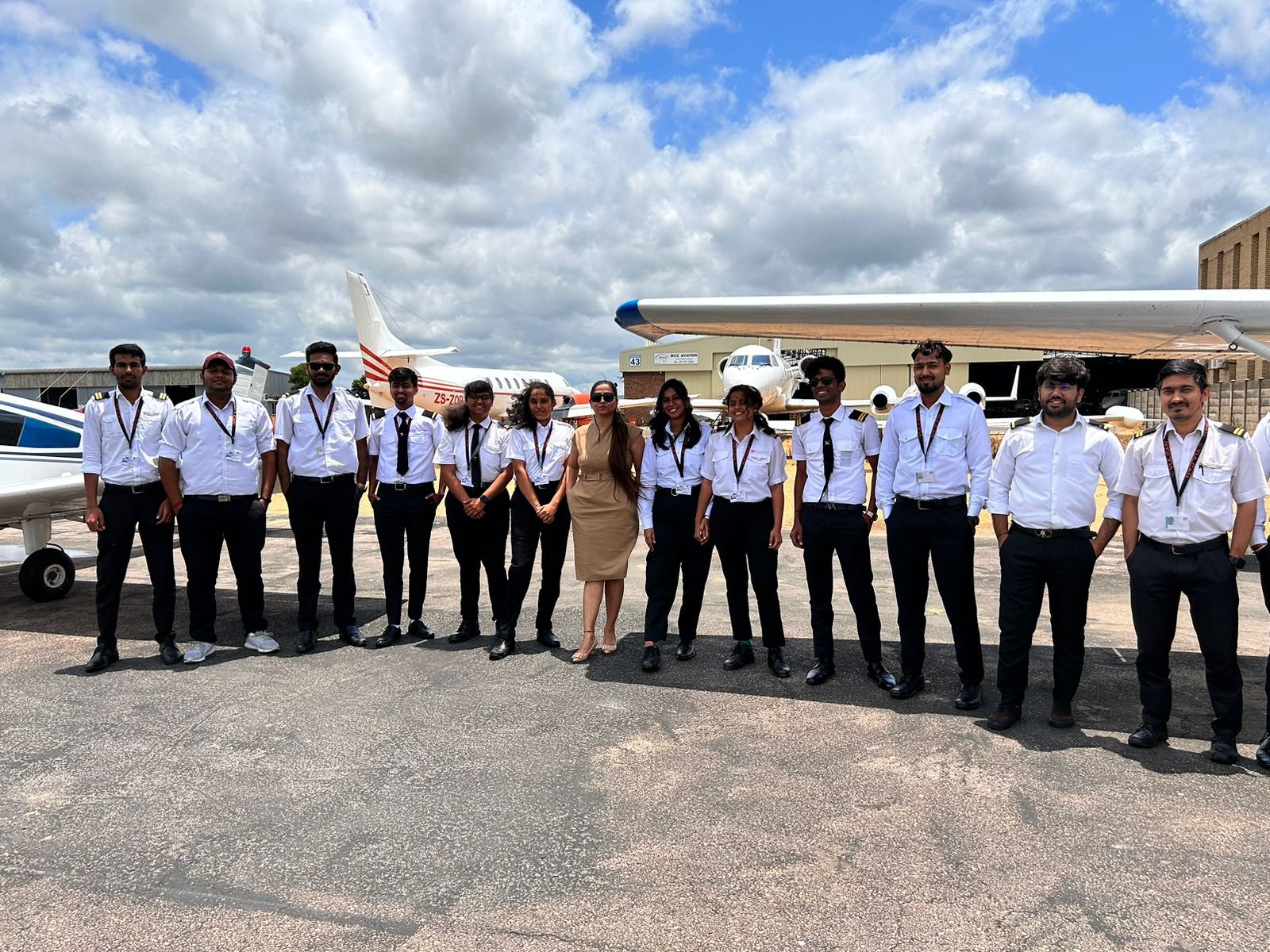
Beyond meeting the minimum educational criteria, students who want to work as airline pilots must fulfil extra prerequisites.
The commercial pilot eligibility in India often consists of:
- 18 is the minimum age.
- Completion of Physics and Mathematics in 10+2 (or equivalent)
- A valid Class 1 Medical Certificate
- Passing the DGCA exams
- Finishing the necessary number of flight hours
- Training at a Flying Training Organisation (FTO) authorised by the DGCA
After finishing their training, candidates who meet these qualifications can apply for a Commercial Pilot License.
Commercial Pilot License Requirements in India
A CPL requires several operational standards in addition to medical and educational credentials.
Some crucial requirements are as follows:
- Completion of the required ground school subjects
- Required hours of solo flights
- Training in cross-country navigation
- Instrument flying
- Night flying
- Qualification for Radio Telephony (RTR)
- DGCA tests
- A skill test administered by a qualified examiner
These regulations guarantee that every commercial pilot has the expertise, technical proficiency, and judgment needed for safe flight operations. Many aspiring pilots also use in-house G1000 simulator training to build cockpit familiarity and instrument-flying confidence before their actual flight hours begin.
Documents Required for Pilot Training
Getting the required licenses and preparing the paperwork for admission to a flying academy are the steps to be taken after you’ve confirmed your pilot eligibility in India.
Candidates are often expected to submit the following, though some academies may have different requirements.
- Certificates and mark sheets for classes 10 and 12
- Proof of age (Aadhaar card or birth certificate)
- Photo ID issued by the government (PAN card, passport, or Aadhaar)
- Passport-sized photos
- A valid Class 2 medical certificate (and subsequently a Class 1 medical certificate)
- Character certificate (if the academy requires it)
- Address proof
- A passport (particularly if you intend to train abroad)
Preparing these documents ahead of time will assist in expediting the admissions process and prevent needless delays.
Common Mistakes Aspiring Pilots Make
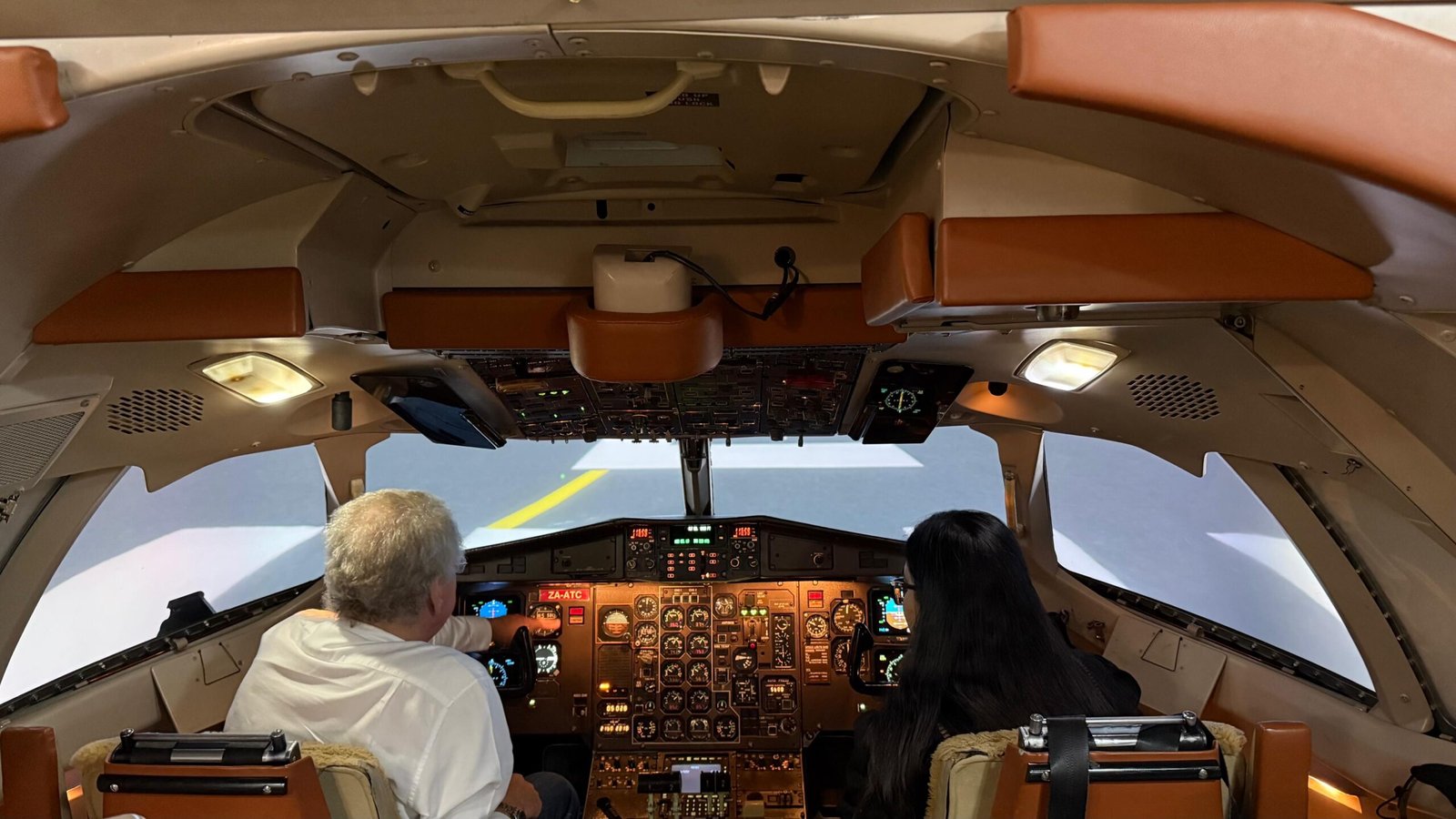
Simply because they don’t comprehend the eligibility conditions, many students put off their flying trip.
Here are a few typical errors to steer clear of:
- Believing That Only Students in Science Can Become Pilots
After completing the necessary Physics and Mathematics courses through approved programs, students with backgrounds in the arts or commerce can also pursue flying.
- Disregarding Health Fitness
Before passing through a DGCA medical examination, several students spend money on coaching or admission. Early completion of your medical evaluation helps verify your eligibility and avoids unforeseen problems down the road.
- Selecting an Unapproved Flight School
Always confirm that the DGCA has approved the Flying Training Organisation (FTO) of your choice. Licensing criteria may not be met by training received at an unlicensed institution.
- Taking Too Long to Get Ready
Students can better arrange their course selections, medical exams, and money if they start looking into the basic qualification for pilot training in India while they are still in school.
- Ignoring Communication Skills in English
Strong reading, writing, speaking, and listening abilities can help you succeed during training and your professional career because aviation communication is done in English.
Tips to Prepare Before Joining Flight Training
Meeting the eligibility criteria is only the beginning. You can make your transition into flight training smoother by preparing in advance.
Some useful steps include:
- Learn the fundamentals of aviation and aircraft operations.
- Improve your spoken and written English.
- Build strong study habits for DGCA ground classes.
- Maintain good physical health and fitness.
- Research DGCA-approved flight schools thoroughly.
- Understand the costs involved in training and plan your finances.
- Speak with current students or licensed pilots to gain practical insights.
These steps won’t replace the formal commercial pilot requirements in india, but they can help you start your training with greater confidence.
Fulfilling the requirements is just the first step. If you prepare ahead of time, your transition into flight training will go more smoothly.
Among the helpful actions are:
- Acquire an understanding of the principles of aviation and aircraft operations.
- Improve both your written and spoken English.
- Develop effective study techniques for the DGCA ground subjects.
- Maintain good physical health and fitness
- Do extensive research on flight schools that have been approved by the DGCA.
- Plan your budget and be aware of the fees associated with training.
- To obtain useful information, talk to licensed pilots or current students.
Frequently Asked Questions (FAQs)
1) What are the prerequisites for pilot training in India?
Acquiring the necessary DGCA medical certification, fulfilling the minimum age requirement, finishing higher secondary school, and studying physics and mathematics (or an approved equivalent) are the basic qualifications for pilot training in India.
2) What age is required to begin training as a commercial pilot?
Although candidates must typically be at least 18 years old to get a Commercial Pilot Licence (CPL), students can start flight instruction at a younger.
3) What are India’s standards for commercial pilots?
The following are the main commercial pilot requirements in India
- 10+2 with math and physics (or comparable)
- Class 1 DGCA Medical Certification
- Finishing the necessary number of flight hours
- Passing the DGCA tests
- Completing the CPL skill test successfully
4) Can arts or commerce students become pilots?
Yes, but there is a crucial requirement.
Before starting CPL training, you must finish Physics and Mathematics through a recognised board or comparable program approved by the DGCA if you finished Class 12 in the Arts or Commerce stream without these courses.
You can pursue commercial flight training just like any other applicant once you’ve met these criteria. Students who develop a passion for flying later in their academic careers can now access aviation thanks to this flexibility.
5) Can engineering or science graduates become pilots?
Yes. Because they already have a solid background in math and physics, many engineering and science graduates move into the aviation industry. Because of their academic background, graduates may even be better familiar with some aspects of flying training, such as aircraft systems, navigation, and aerodynamics.
Regardless of your degree, you must still fulfil the DGCA’s eligibility standards for commercial pilot training in India.
6) Can women become commercial pilots?
Yes. In India, there are no special requirements for women who want to work as commercial pilots.
All candidates must meet the same requirements, which include:
- Educational qualifications
- Medical fitness
- Age requirements
- DGCA tests
- Requirements for flying hours
Many major airlines actively promote diversity in their pilot recruitment programs, and India has one of the highest percentages of female commercial pilots worldwide. Gender has no bearing on admission to flight training or job chances as long as candidates fulfil the requirements of becoming a commercial pilot in India.
7) What are the eligibility criteria to become a pilot for NRI and international students?
International students and non-resident Indians (NRIs) may also undertake flight training in India, subject to the restrictions of the relevant government and the norms of the selected flying academy.
The following may be required of applicants, depending on the institution:
- A valid passport
- The right visa (if applicable)
- Educational qualification certificates
- Medical fitness documentation
- Proficiency in English (if necessary)
Students should speak with the academy directly to confirm the criteria for admission, since different documentation processes may apply.
To get an Indian Commercial Pilot License, applicants must meet the DGCA licensing standards and the necessary pilot qualification in India, regardless of their nationality.
8) Does being a pilot entail having great vision?
No, a lot of pilots use contact lenses or glasses. Meeting the vision standards established during the DGCA medical test is what counts.
Conclusion
The first step to starting a successful aviation career is to get an understanding of pilot eligibility in India. Although becoming a commercial pilot demands dedication, the prerequisites are simple to meet with careful preparation.
Completing the necessary coursework, fulfilling the age requirements, getting DGCA medical clearance, and joining a DGCA-approved Flying Training Organisation are the essential components. During their training, prospective pilots should also concentrate on maintaining good physical health and honing their English communication skills. You can start your road toward obtaining a Commercial Pilot License and pursuing a fulfilling career in aviation by fulfilling the necessary qualifying requirements and getting ready early.
Whether you’re a recent graduate considering a career in aviation or a student planning your future, knowing the pilot qualification in India can help you make wise choices and steer clear of typical pitfalls.