Becoming a pilot is a dream for many, but not achieved by all. What most students don’t know is that choosing flying is not just a career choice – it is a commitment to discipline, perseverance, and responsibility at 35000 feet. The dream of becoming a pilot for most aspirants starts with watching aircraft fly high in the sky and wondering, “How do I get there?”, or more importantly, “How to become a pilot in India?” The journey to becoming a commercial pilot may seem complex at first, but if broken down into several steps, it becomes achievable and structured.
With the aviation industry growing faster than ever, the dream of becoming a pilot may not be far-fetched in 2026. Currently, as new airlines emerge and established airlines expand their fleets, demand for well-trained, dedicated pilots is rising. The dream of becoming a pilot does not begin with just enrolling in a flight school. It commences way earlier, with understanding the eligibility requirements, getting the medicals done, joining ground school, and clearing the DGCA subjects. The key to becoming an incredible pilot is mastering the concepts during ground school. This is what lays the foundation for a student’s pilot journey.
If you are someone exploring a career in aviation, you must have asked yourself various questions, such as:
- What are the eligibility criteria to become a pilot?
- What is a computer number and why is it important?
- What are the correct steps to become a pilot?
- When should I get my medicals done?
- How much does pilot training cost?
- Which subjects do I need to clear?
- Is simulator training necessary? What are its advantages?
In this comprehensive guide, we aim to clear all your doubts. This blog breaks down all the steps – from obtaining your computer number to commanding a multi-jet aircraft, including the cost, salary, and eligibility.
Who can Become a Pilot? Eligibility Criteria
Before deciding to pursue a career in aviation, an aspiring pilot must fulfill the stringent requirements set by the Directorate General of Civil Aviation (DGCA). The requirements are set to ensure that every pilot is capable of taking on the responsibility of flying an airplane. The standards set by the regulatory body of India (DGCA) include specific criteria for academic qualifications, physical fitness, communication skills, and age requirements. See our complete pilot eligibility checklist for a full breakdown of each requirement.
1) Educational Qualifications to Become a Pilot in India after 12th
The basic criteria to pursue a career in aviation require you to clear your 10+2 with Physics and Mathematics. The criteria are based on the fact that a pilot aspirant must study subjects such as navigation, meteorology, aircraft performance, and flight mechanics, all of which rely on basic principles of physics and mathematics.
If you are an aviation aspirant who didn’t opt for physics and mathematics in your 12th grade, that doesn’t mean you cannot become a pilot. Such students can clear these subjects through open schooling, such as the National Institute of Open Schooling (NIOS) or another recognised board. Once the subjects are cleared, you are now eligible to start your aviation journey!
2) DGCA Medical Requirements
Being physically and mentally fit is one of the most important criteria that must be fulfilled by aspiring pilots, as explained in the detailed DGCA medical requirements guide. These rules ensure that a pilot is physically and mentally healthy to command a complex aircraft and make sound decisions during emergencies. Most students exploring a career as a pilot are concerned about vision and height requirements.
- Vision Requirements: The DGCA norms require a student pilot to have 6/6 vision in both eyes, with or without correction. This allows aspirants with corrective glasses to fly commercially. Additionally, the colour vision must be normal.
- Height Requirements: The DGCA has not set any height requirements for aspirant pilots. There is only one rule: the student must be able to reach all cockpit controls with a seatbelt on.
There are generally two medical types an aspirant must pass in India to obtain their CPL: Class 2 and Class 1 Medical. These medicals are conducted by various doctors and medical centres authorised by the DGCA.
- Class 2 Medical:
The student must finish a Class 2 medical before starting their aviation journey. This medical class consists of a series of tests that allow the medical professional to evaluate a student’s overall health based on parameters such as BMI, vision standards, hearing ability, cardiovascular health, and overall physical fitness.
Validity:
-
- Upto 40 years of age: 24 months
- Above 40 years: 12 months
- Class 1 Medical:
A student must obtain this medical before starting their flying. It consists of a series of more comprehensive tests that analyse the student’s fitness in greater detail.
Validity:
-
- Upto 40 years of age: 12 months
- Above 40 years: 6 months
An aspiring pilot is required to maintain the physical standards set by DGCA throughout their career as a pilot.
3) Age Requirements:
DGCA has set minimum age requirements for different stages of flying training.
- SPL: Minimum age to obtain SPL is 16 years.
- PPL: Minimum age to obtain a PPL is 17 years.
- CPL: Minimum age to obtain a CPL is 18 years.
- ATPL: Minimum age to obtain an ATPL is 21 years.
4) English Level Proficiency:
Aviation is an international industry, regulated by the International Civil Aviation Organisation (ICAO). ICAO has set English as the standard language for worldwide communication between pilots and air traffic controllers. It is, therefore, important for a pilot aspirant to be able to speak and understand conversational English for the safe operation of an aircraft. This criterion is typically met by passing the ICAO English Proficiency test at level 4 or higher.
Types of Pilot Licenses in India
1) Student Pilot License (SPL)
The first license an aspiring pilot obtains is the Student Pilot License (SPL). It is issued by the DGCA-approved Flying Training Organisation (FTO) to allow a student to start flying under the supervision of an instructor. To obtain the SPL, a student pilot must pass oral examinations or DGCA written examinations in the subjects Air Regulations, Air Navigation, Aviation Meteorology, Technical General, and Technical Specific. Additionally, the student must have a valid Class 2 Medical Certificate.
2) Private Pilot License (PPL)
After obtaining an SPL, the second step in the journey is to obtain the Private Pilot License (PPL). It allows the student to fly passengers, but not for commercial purposes. It is issued not earlier than 40 hours of flying and requires the student to have a valid Class 2 medical certificate issued by a DGCA-approved medical examiner.
3) Commercial Pilot License (CPL)
Obtaining a Commercial Pilot License (CPL) is the final stage that allows you to start flying commercially. It is issued after a minimum of 200 flight hours. To obtain the CPL, the student must have cleared the DGCA written examinations, hold a valid RTO(R) license, and have a Class 1 medical certificate.
4) Airline Transport Pilot License (ATPL)
The ATPL is the highest level of pilot certification and is a prerequisite for commanding a multi-engine aircraft. It is obtained after gaining 1500+ hours of experience as a First Officer. The license allows a commercial pilot to act as a Pilot in command or Captain of the aircraft.
Step-by-Step Process: Your Flight Plan to the Cockpit
Once a student meets the DGCA’s eligibility criteria to become a commercial pilot, the next step is to begin their journey. There is a structured plan that every student pilot must follow to complete their training without any delays.
In this section, we break down the steps to transition from a student pilot to a commercial pilot.
Step 1: Create your eGCA ID
The first and foremost step to be followed by any aspiring pilot is to create an eGCA (e-Governance for Civil Aviation) ID. This ID is a unique digital identity that allows all pilots and engineers in the aviation industry to access DGCA services. Once the registration is completed, a student pilot’s complete medical records, flight training updates, RTR updates, license issuance, etc., can be accessed directly through the portal. Your eGCA ID will be used throughout your pilot journey to manage exam results, issue licences, track your flight training progress, etc.
Step 2: Obtain your Class 2 Medical Certificate
The next step in your pilot journey is to undergo a Class 2 Medical Examination from a DGCA-approved medical centre or examiner. This medical examination ensures that a person meets the basic health criteria required for aviation training. The medical examiner conducts a series of tests and uploads the results to your eGCA ID. DGCA then evaluates these medical records, and a medical assessment is issued within 7-20 days. A Class 2 Medical Certificate is valid for 2 years (for people under 40 years). Within these 2 years, the Class 2 must be upgraded to a Class 1 Medical Certificate. As said before, since physical fitness is one of the most important criteria for becoming a pilot, medicals must be done early in the journey to avoid complications later.
Step 3: Apply For a Computer Number
After acquiring the Class 2 Medical assessment, the next obvious step is to apply for a computer number. It is another unique 10-digit alphanumeric ID issued by DGCA. It is essential for appearing in theoretical aviation exams, such as Aviation Meteorology, Air Navigation, Air Regulations, Technical General, and Technical Specific. Aspiring pilots can apply for a computer number through the Pariksha portal. The application requires several documents, including identity proof, Class 10th and Class 12th mark sheets, and passport-sized photographs. Once the DGCA assigns a computer number, an aspirant is now eligible to apply for the Flight crew examinations.
Step 4: Enroll in Ground Classes
With your class 2 medical assessment and computer number in hand, you are now ready to begin your preparation for the theoretical subjects. Choosing a good ground school is a crucial step in an aspiring pilot’s journey, as it sets the foundation for their entire career which is why many students compare different DGCA ground classes before enrolling. If chosen wisely, the concepts will click quickly, and the check-rides will feel less daunting later in your career. While choosing a ground school, a few elements you can look for include:
- Proven Instructors
- Simulator availability and ease of access
- Curriculum offered by the ground school
- Availability of instructors for doubt-clearing sessions
- Published pass rates
These elements help you ensure that the ground school you have chosen will allow you not just to clear papers, but will help you learn habits that will last your entire career.
Step 5: Clear DGCA theory exams
After joining ground classes, the students must start clearing the ground subjects. These exams are held monthly, with 4 regular and 8 on-demand sessions. A student must clear 6 exams. The minimum passing percentage to pass is 70%.
Step 6: Obtain the RTO(R) License
Another important requirement for a student pilot is to acquire the restricted telephony operator’s license. The license allows a pilot to communicate with the air traffic controllers. To obtain the license, a student must pass two parts: part 1, a written examination, and part 2, a transmission test. After clearing both parts, the student is now eligible to apply for the RTO(R) license.
Step 7: Obtain a Class 1 Medical Certificate
After clearing all the examinations, the next step is to start flying. But to fly, a student must have a valid Class 1 Medical Certificate. The next step, therefore, is to undergo a class 1 medical examination from a DGCA-approved medical examiner or a centre.
A Class 1 medical examination consists of more comprehensive tests than a Class 2 medical examination.
Step 8: Join a Flying School
After completing the steps above, the next obvious step is to join a flying school. When choosing a flying school, a student can either complete their flying abroad or in India and many aspirants explore different pilot training destinations before making a final decision. If a student chooses to fly abroad, they must convert their license upon returning to India. A number of factors must be considered before choosing a flying school, such as:
- Aircraft fleet availability
- Condition of the aircrafts
- Instructor-to-student ratio
- Weather conditions at the place where the FTO is located
- Safety standards of the FTO
- Maintenance standards of the FTO
- Availability of simulators
By keeping these factors in mind, a student can make an informed decision about which flight school to choose. After joining the flying school, a student pilot works towards completing their 200 hours in accordance with the DGCA’s requirements. This topic will be detailed in the upcoming blogs to help students choose a flying school that completely meets their standards and requirements.
Step 9: Apply for a DGCA Commercial Pilot’s License (CPL)
Once all the training requirements are complete, a student pilot is now eligible to apply for a Commercial Pilot’s License (CPL). The documentation required to apply for a CPL includes proof of 200 hrs of flying, DGCA exam results, an RTR license, and a Class 1 medical certificate. Once verified, DGCA issues a CPL to the applicant. This is the last and final step for all the aspirants for all the aspirants who want to become a commercial pilot in India.
Pilot Training Cost and Timeline: Your 2026 Guide
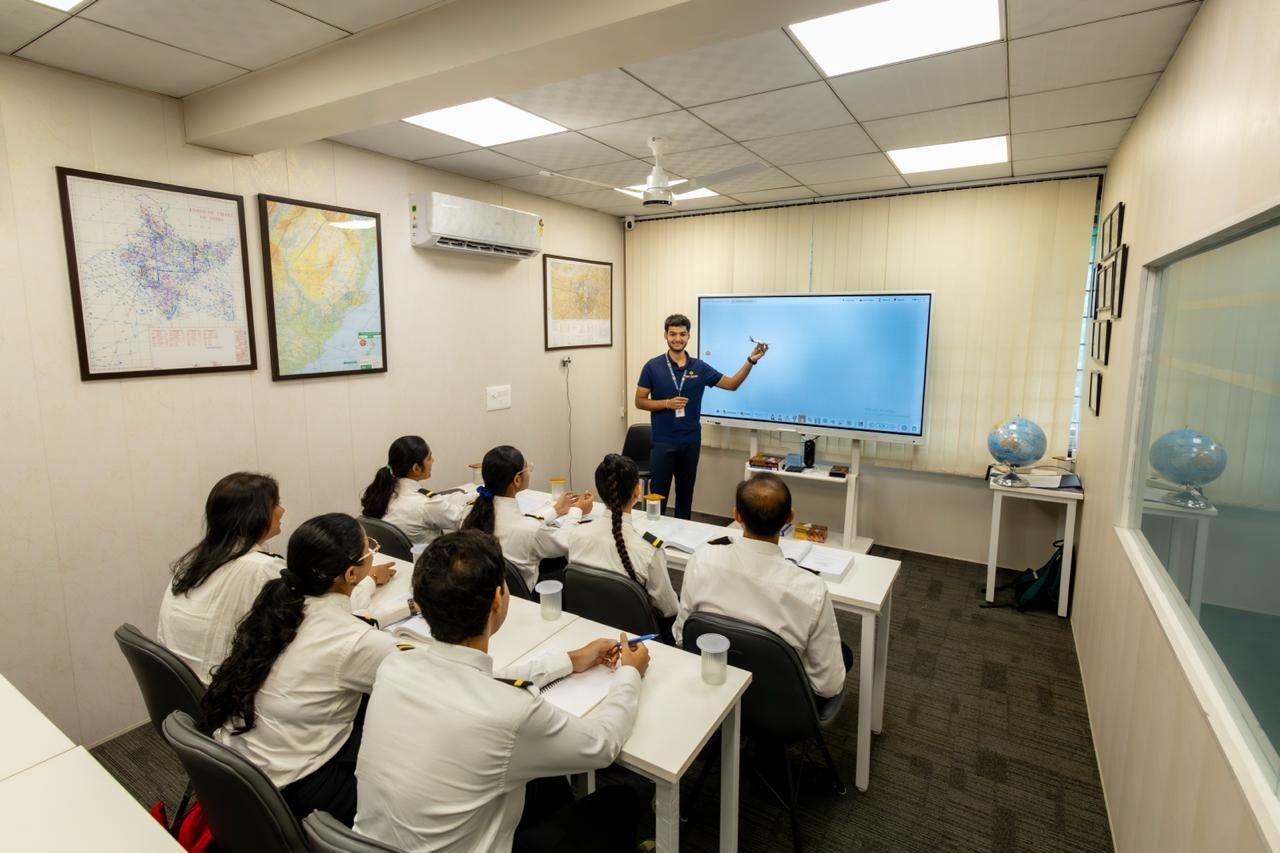
The cost and timeline to obtain a CPL depend on various factors, including whether a student flies from India or abroad, the type of training aircraft used, and the infrastructure and facilities provided by the FTO. In India, on average, a student pilot can obtain their CPL in 18-24 months, starting with ground school. This timeline can be significantly reduced if a student decides to pursue flying training abroad, which can take 12-18 months. A few countries where flying is accelerated by year-round good weather and a large fleet include the USA, Canada, South Africa, New Zealand, and Australia.
The pilot training cost in India ranges from 45-60 Lakhs, whereas the cost abroad ranges from 50-80 Lakhs, including conversion. This cost depends mainly on the country chosen for pilot training and the living expenses. This cost generally includes ground school, flying hours, exams, check rides, and medicals.
Pilot Salary In India
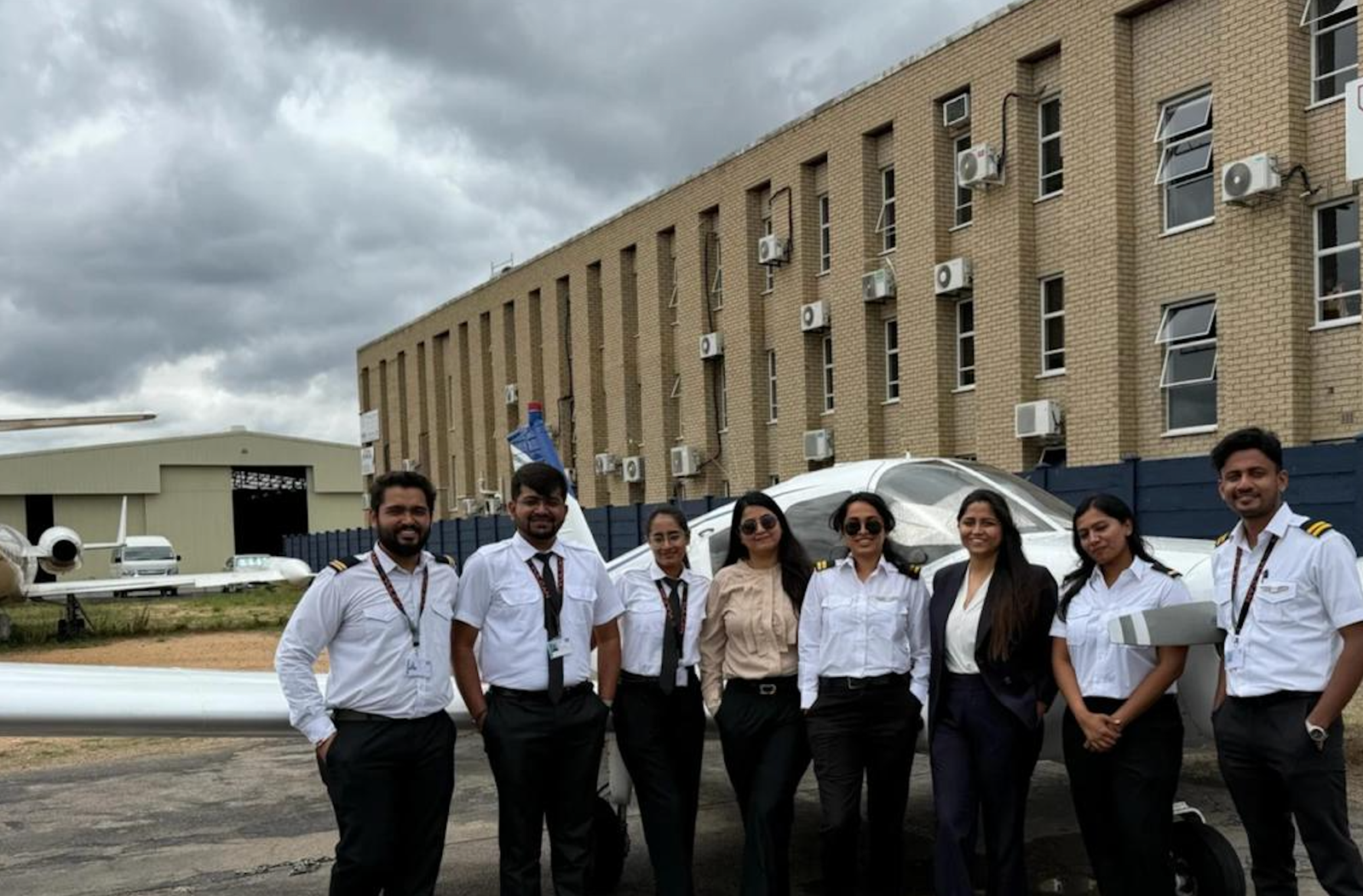
One question that lingers in every pilot aspirant’s mind includes, “Is spending ₹45-80 Lakhs for pilot training worth it?” The answer to this question is a big yes. A beginner pilot starts with an average monthly salary of ₹1 Lakh, and it increases as the pilot’s experience and rank increase. A breakdown of the pilot salary in India per month is given in the table below:
| Pilot Rank | Average Pilot Salary in India Per Month |
| Junior First Officer (JFO) | ₹1L – ₹1.8L |
| First Officer (FO) | ₹1.8L – ₹3L |
| Senior First Officer | ₹2.5L – ₹4.5L |
| Captain (Domestic/Short Haul) | ₹6L – ₹10L |
| Captain (International/ Wide-Body aircrafts) | ₹8L – ₹15L |
Top Airlines Hiring in India
As an aspirant progresses to understand how to become a pilot in India, one of the biggest motivations is to know which airlines one can work for after obtaining a CPL. With India’s aviation sector growing rapidly, many Indian airlines are hiring trained pilots. Some of the top airlines in India include:
- Indigo
- Air India
- Akasa Air
- Air India Express
- Spice Jet
Simulator Training During Ground Classes: A Game Changer
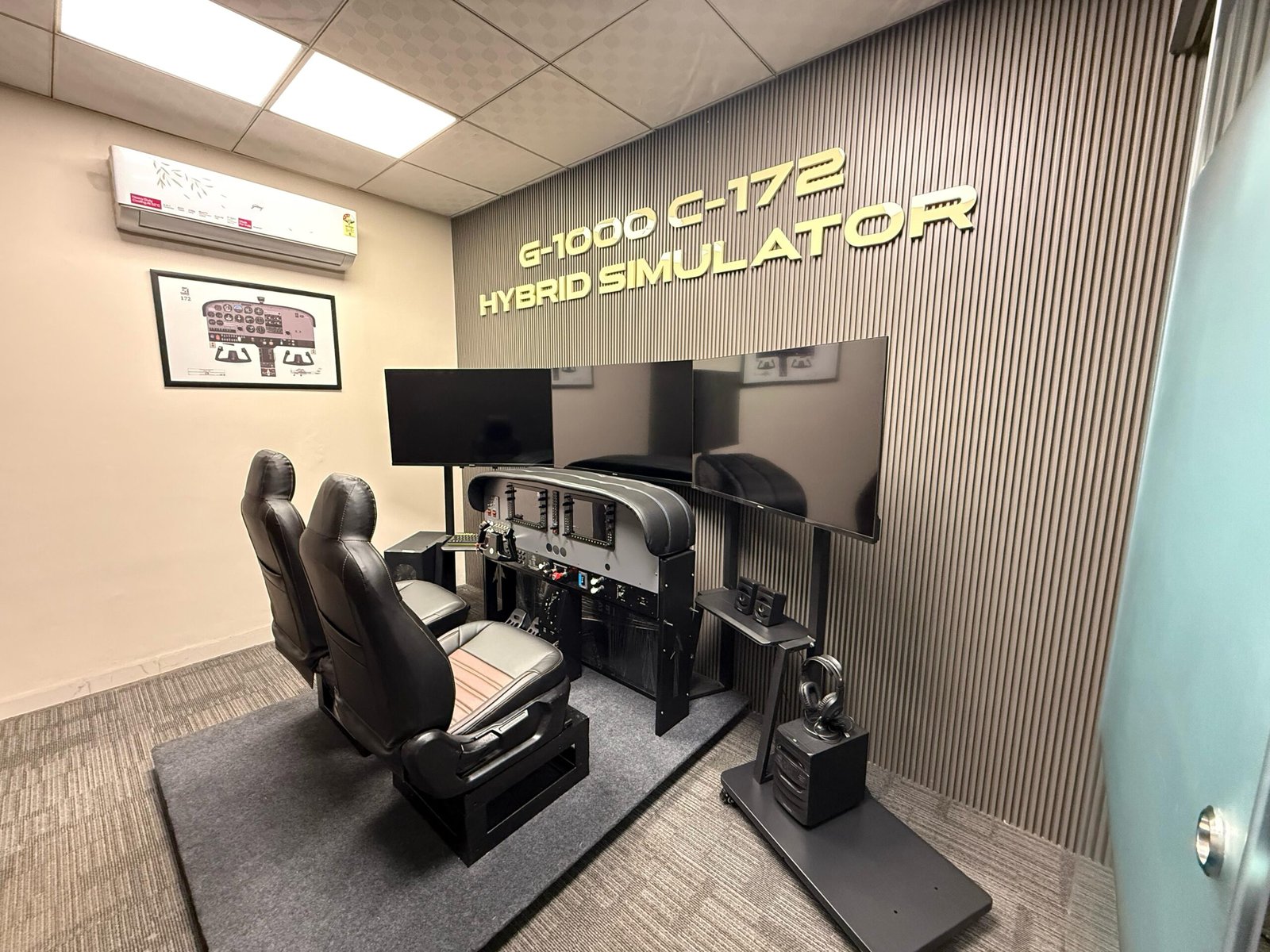
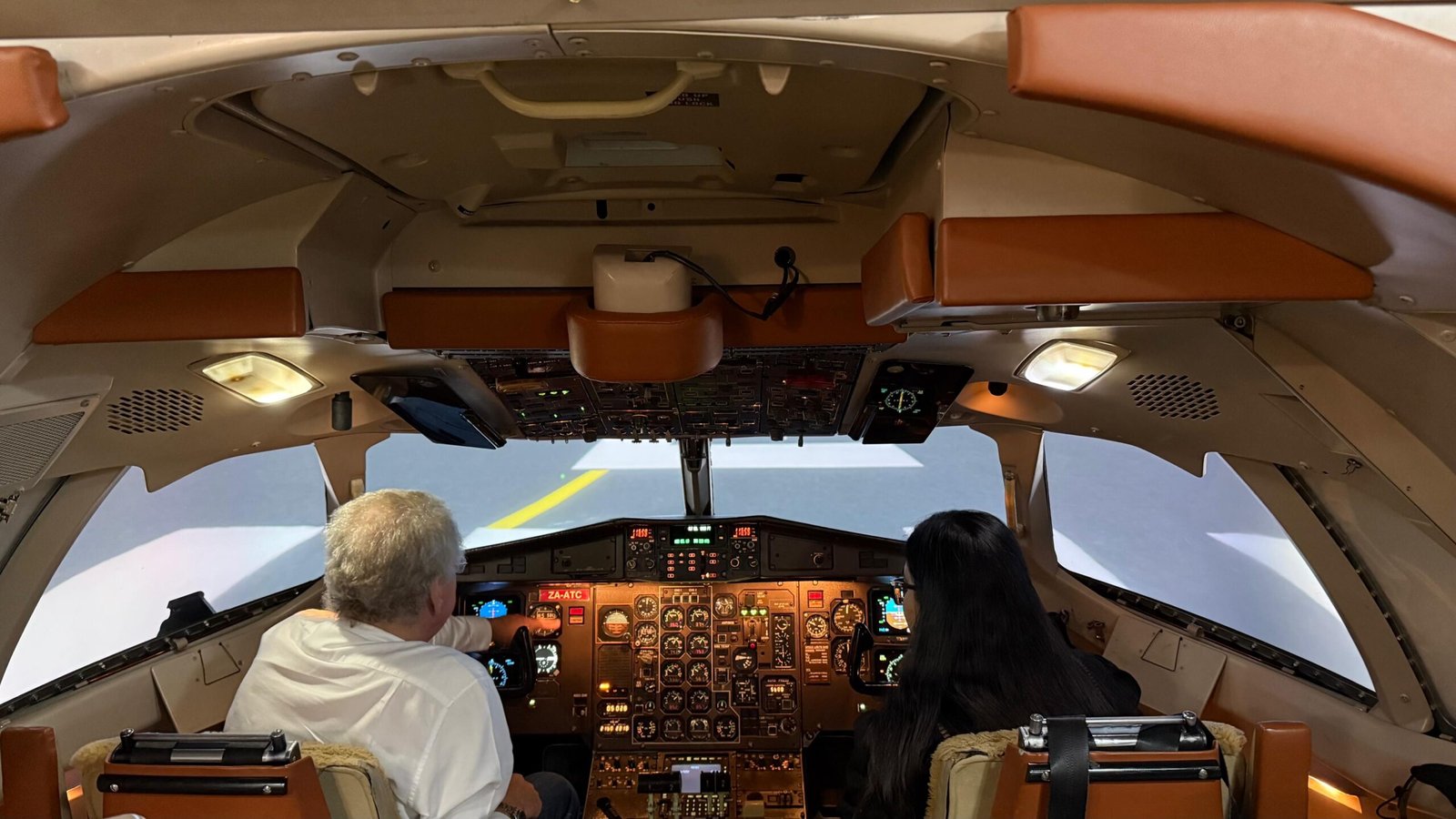
In the previous section, while deciding on a good ground school, one of the factors we mentioned was the availability of simulator training. Even though it is not a prerequisite for flying, if chosen early in the journey, it can easily bridge the gap between classroom learning and real cockpit experience. Ground schools that offer simulator training not only provide theoretical knowledge through textbooks but also allow students to apply those concepts in practice through flight simulator training. A few reasons that make simulator training a game-changer in the flying journey include:
1) Visualizing Complex Aviation Concepts:
While studying for the theoretical subjects, there are certain topics, such as wind correction angles, holding patterns, aircraft headings, instrument procedures, etc., which might not make sense in the beginning. At moments like this, simulator training comes in handy, allowing students to gain a deeper understanding of these topics by applying theoretical principles in a simulated environment.
2) Stronger Understanding of Aircraft Instruments:
A significant portion of Air Navigation includes aircraft instruments, such as airspeed indicator, altimeter, attitude indicator, turn and slip indicator, vertical speed indicator, etc. Simulator training comes in handy again, allowing students to build the habit of situational awareness way before they start their flying journey. This skill will allow them to act efficiently during emergencies and reduce the number of hours spent flying on teaching. These flying hours can then be utilized to hone their skills.
3) Early Exposure to Real Cockpit Procedures:
Simulator training during ground classes exposes students to the cockpit early on in their career, helping them familiarize themselves with cockpit layouts and practice checklist procedures. This early exposure helps students to stay comparatively calm and confident when they begin their actual flight training.
4) Improved Radio Communication Skills:
Another advantage of opting for simulator training during ground classes is the opportunity to practise aviation phraseology and aviation communication procedures. The constant practice actively helps them clear the exams for the RTO(R) License while preparing them to handle real radio communication during flight training.
With technological advancements over the years and the evolution of the aviation industry, simulator sessions have enabled ground classes to impart application-based knowledge to students. The sessions allow students to understand aviation concepts in both theoretical and practical contexts, thereby making them more confident and calm when they start their actual flying training.
Where to Begin?
Becoming a pilot is a journey that requires extreme dedication, discipline, planning, and the right guidance at every step. It does seem complex at first, but a structured roadmap is what makes the journey simpler and smoother. From creating your eGCA ID to logging 200 hours for your CPL, each step plays a crucial role in the shaping of a future pilot. With the aviation industry continuing to grow rapidly, a large number of opportunities are opening up for future pilots.
The key to becoming an exemplary aviator lies in the guidance students and their families receive from professionals. We, at GetWings Aviation, focus on creating exemplary, disciplined pilots. We believe every student’s journey is different, so we customize it based on their requirements. With experienced instructors, a comprehensive DGCA curriculum, regular mock tests, and doubt-clearing sessions, GetWings helps students to develop conceptual clarity to excel in subjects like Aviation Meteorology, Air Navigation, Air Regulations, Technical General, Technical Specific, and RTO(R). In addition, our in-house simulator allows students to visualize real flight scenarios while learning basic aviation concepts.
If you are ready to start, or simply want to understand the steps required to begin – just talk to our team. We will map out a realistic plan for you, based on where you are now.
Frequently Asked Questions (FAQs)
-
What are the eligibility criteria to become a pilot in India?
To become a commercial pilot in India, DGCA requires a candidate to be at least 18 years old, hold a 10+2 certificate with Physics and Maths, possess a DGCA Class 1 medical certificate, and be fluent in English.
-
How much does it cost to become a pilot in India?
The average cost to become a pilot varies from ₹45L-₹60L to obtain the CPL and another ₹15L-₹20L for the type-rating of a commercial aircraft.
-
What is the salary of a pilot in India per month?
The salary of a pilot in India varies based on experience and rank. A fresher pilot or Junior First Officer has an average salary of ₹1L-₹1.8L. The salary keeps increasing and may range anywhere from ₹15L-₹20L per month in India.
-
How many years does it take to become a pilot in India?
It can take anywhere from 18 to 24 months to become a pilot in India. This timeline varies depending on the chosen FTO and the student pilot’s learning capacity.
-
Can I become a pilot if I wear glasses?
Yes, if a candidate has 6/6 vision in both eyes with corrective glasses, they are eligible to become a pilot.
-
Can a Commerce/Arts Student become a Pilot in India?
Yes, by clearing Physics and Maths through the NIOS board and fulfilling the other criteria by the DGCA, a commerce/arts student can successfully pursue an aviation career.